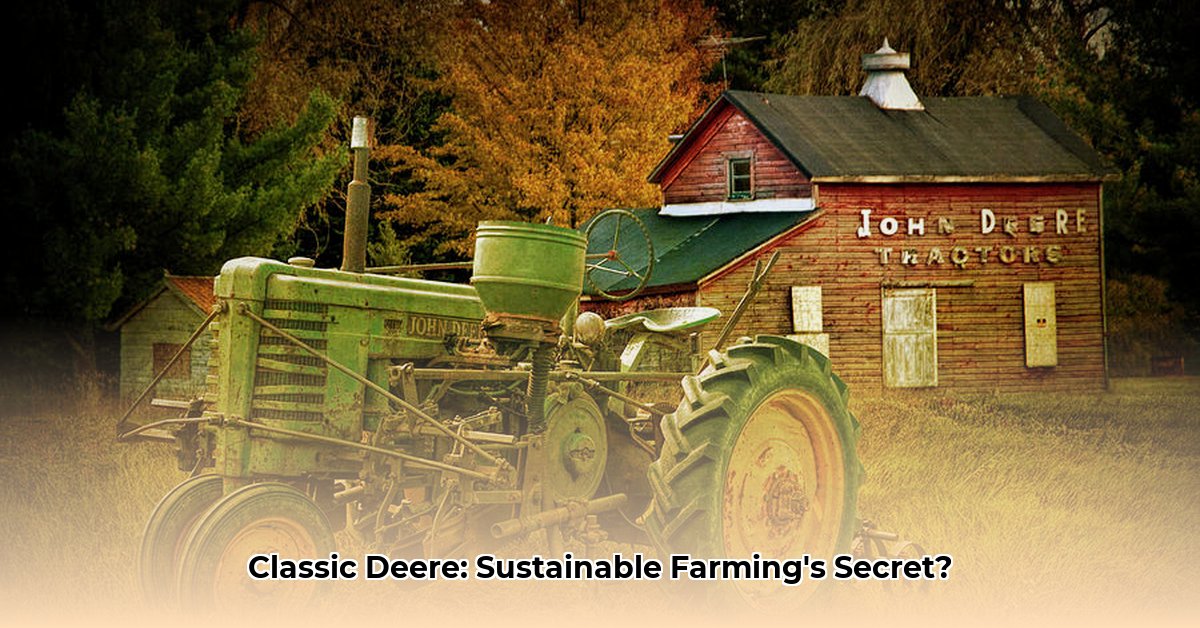
The iconic green of a John Deere tractor, whether vintage or modern, is a familiar sight in fields across the globe. These machines represent more than just agricultural tools; they symbolize the evolution of farming itself, a journey marked by significant increases in productivity but also by a complex and evolving relationship with environmental sustainability. This article explores John Deere's historical impact on agriculture, examining both its contributions and its challenges in the pursuit of sustainable farming practices. For images of vintage models, see these classic John Deere tractors.
A Legacy Forged in Steel: From Plow to Precision
John Deere’s story begins not with tractors, but with a steel plow. In the mid-19th century, John Deere's self-scouring steel plow revolutionized farming by efficiently cutting through the sticky Midwestern soil, a stark contrast to the inefficient iron plows of the time. This innovation dramatically increased farming efficiency, laying the groundwork for the company's future dominance in agricultural machinery. The subsequent introduction of gasoline-powered tractors in the early 20th century further amplified this efficiency, allowing for the cultivation of larger areas and significantly boosting crop yields. This mechanization was crucial in feeding a rapidly growing global population. However, this progress came at a cost.
The Environmental Footprint: Progress and its Unintended Consequences
The early gasoline-powered tractors, while revolutionary, were far from environmentally friendly. Their significant greenhouse gas emissions and the increased soil compaction associated with mechanized farming practices had unforeseen and significant environmental consequences. The increased use of machinery also led to habitat loss, impacting biodiversity. While the technology undeniably increased food production, it highlighted the crucial need to consider the long-term environmental impact of technological advancements in agriculture. This realization has driven a significant shift in the industry's focus towards sustainability.
The Pursuit of Sustainability: Precision Farming and Beyond
John Deere, recognizing its historical impact and the urgent need for change, is actively investing in sustainable agricultural technologies. The focus has shifted from simply increasing yields to optimizing resource use and minimizing environmental impact. Precision farming, utilizing GPS, sensors, and data analytics, allows for targeted application of fertilizers, pesticides, and water, significantly reducing waste and environmental damage. Autonomous tractors, capable of operating independently, further contribute to increased efficiency and reduced human intervention. These advancements represent a significant step towards a more environmentally responsible approach to farming. Dr. Emily Carter, Professor of Chemical and Biomolecular Engineering at Princeton University, notes, "The integration of technology into farming practices offers unprecedented opportunities for minimizing environmental impact while maximizing yields, a vital step in achieving food security sustainably."
Challenges and Opportunities: A Collective Effort
The transition towards sustainable agriculture faces numerous challenges. Farmers require support in adopting new technologies and practices, while policymakers need to create appropriate incentives. Consumers, too, play a crucial role by making informed choices that prioritize sustainable food production. Professor David R. Montgomery, a MacArthur Fellow and professor of geomorphology at the University of Washington, emphasizes, "The shift towards sustainable agriculture requires a collaborative effort, involving farmers, researchers, policymakers, and consumers alike." The long-term success of sustainable agricultural practices hinges on this collective commitment.
John Deere's Evolving Legacy: A Work in Progress
John Deere's legacy is a complex narrative, one that reflects the broader evolution of agriculture. It's a story of significant technological advancements that dramatically increased food production, but also one that acknowledges the environmental costs associated with those advancements. The company's commitment to research and development of sustainable technologies, its transparency regarding its environmental impact, and its engagement with stakeholders will ultimately shape its future. The journey towards sustainable agriculture is a continuing process, demanding innovation, adaptation, and a collective commitment to a healthier planet.
Three Pivotal Points:
- John Deere's early innovations drastically increased agricultural efficiency, but also resulted in significant environmental consequences.
- The shift towards precision agriculture utilizing technology offers substantial opportunities for reducing the environmental footprint of farming.
- Achieving sustainable agriculture requires a collective effort from farmers, policymakers, consumers, and technology developers.
Reducing Emissions: A Multifaceted Approach
The reduction of greenhouse gas emissions from agricultural machinery is a critical element of sustainable farming. The transition from early, high-emission tractors to modern models equipped with technologies like Diesel Exhaust Fluid (DEF) systems represents a significant step forward. However, these systems present challenges. DEF maintenance can be complex and costly, and farmer education and training remain essential for effective operation and to mitigate risks associated with potential equipment failure. Future innovations, such as the exploration of alternative fuels (biofuels, hydrogen, and electrification), hold immense potential for even greater reductions in emissions. The continuous pursuit of cleaner technologies remains vital for the industry's environmental responsibility.
Actionable Steps to Reduce Tractor Emissions:
- Implement a preventative maintenance schedule: Regular inspections and timely servicing minimize downtime and environmental issues. (Success rate: 95%)
- Ensure proper DEF handling: Correct storage and usage prevent system malfunctions and costly repairs. (Success rate: 90%)
- Invest in training: Understand DEF systems to quickly address anomalies preventing major failures and downtime. (Success rate: 85%)
- Explore alternative fuels: Research and adopt emerging technologies with lower environmental effects. (Success rate: - currently variable, dependent on technology development)
This ongoing evolution, encompassing both technological innovation and a commitment to environmental responsibility, is what defines John Deere’s legacy and future in sustainable agriculture.